




On this page
Quick answer
Why do coloured contact lenses look fake in photos?
Coloured contact lenses can look unnatural in photographs when the shade contrasts sharply with your natural eye colour, the iris pattern appears too obvious, or lighting and camera processing exaggerate the effect. A lens that looks beautiful in person may appear more dramatic in a close-up selfie or under direct flash. Choosing a shade that complements your natural eye colour and understanding how lighting affects photographs can help you find a look you love both in person and on camera.
Why Coloured Contacts Look Different in Photos
- Colour contrast - A dramatic difference between your natural eye colour and your lenses can make the change more noticeable in photographs.
- Iris pattern - The lens's colour distribution and visible pattern influence how natural the finished effect appears.
- Lighting matters - Flash, indoor lighting and daylight can all affect how eye colour appears in photographs.
- Your camera plays a part - Exposure, white balance and image processing can alter colours and emphasise details that look less obvious in person.
It's Not You, It's Your Iris (Well, Partly)
Ever tried on a pair of coloured contacts that looked gorgeous in the mirror, only for a photograph to suggest you'd borrowed someone else's eyes? Annoying, certainly. But there are reasons for the discrepancy, and they have less to do with your beauty choices than you might think.
The secret lies in how the lens colour interacts with your natural iris. Add a camera, some questionable lighting and a close-up selfie, and suddenly a subtle transformation can look rather more dramatic than intended.
When the colour contrast steals the show
A striking colour change can be beautiful, but contrast has a habit of making itself known. Put a pale blue lens over very dark brown eyes, for example, and the transformation may look bold and unmistakable. That's hardly a disaster if you're after a statement look. If you're hoping people will wonder whether your eyes have always been that colour, however, the effect might be a little too enthusiastic.
For a softer result, consider how the lens shade relates to your natural eye colour. Warm hazel, muted green and deeper brown tones can create quite different effects depending on your starting point. The palest shade on the product page isn't automatically the most flattering, nor is the most dramatic colour necessarily the most convincing.
The iris pattern makes a difference
Look closely at a natural iris and you'll see variations in colour, fine lines and intricate patterns. Coloured lenses have their own designs, and how those patterns blend with the wearer's natural eye colour can influence the overall effect.
If the colour pattern looks particularly prominent, or the transition between the lens and natural iris is noticeable, a close-up photograph can draw attention to it. Details that barely register across a restaurant table suddenly become the main event when your eye occupies half the screen.
It's rather like make-up in bright Dubai sunshine: a look that feels perfectly balanced indoors can appear much more pronounced outside. The answer isn't necessarily to abandon the look, but to understand how the details translate under different conditions.
The same shade won't look the same on everyone
A product photograph is a useful starting point, not a binding contract with your eyeballs. Your natural eye colour influences the finished appearance, meaning a shade that looks subtle on one person may create a much more dramatic transformation on another.
When shopping online, look for product images showing different natural eye colours where available. Think about whether you want to enhance your existing shade or create a noticeable change, and judge the lens against that intention rather than expecting an exact copy of the model's photograph.
And remember, natural-looking doesn't have to mean barely noticeable. Sometimes the whole point is to turn heads. The trick is choosing a look you actually want, rather than discovering an unexpected pair of eyes staring back at you from your camera roll.
The Camera Has Opinions, Too
Your bathroom mirror thinks your eyes look fabulous. Your phone camera, apparently, has other ideas. Before blaming your coloured contacts, consider the conditions in which that photograph was taken. Lighting and camera processing can change how colours appear, sometimes making a perfectly lovely shade look surprisingly different.
Flash photography: friend or frenemy?
Direct flash can create strong highlights and shadows, changing the way the iris appears in a photograph. It can also make certain details more prominent, particularly in close-up shots. If your coloured lenses look noticeably different in flash photography, try comparing the result with a photograph taken in softer, even lighting.
That doesn't mean flash is always the enemy. It simply produces a different effect, and the result depends on the lens, the surroundings and the camera.
Indoor lighting versus daylight
Lighting can shift the way colours appear. Warm indoor lights may make some shades look warmer, while cooler lighting can influence how other colours are perceived. Daylight brings its own variables, particularly when the brightness changes.
Anyone who's taken a selfie outside in Dubai knows the sun doesn't exactly do subtle. Bright conditions can create strong highlights and shadows, while stepping indoors can change the overall look again. Your lenses haven't necessarily changed; the light around them has.
Your phone is doing more than taking a picture
Modern smartphones automatically adjust settings such as exposure and white balance, and may apply additional image processing. These adjustments help produce appealing photographs, but they can also alter the appearance of colours and fine details.
A close-up selfie can exaggerate the effect further. When your iris fills much of the frame, its colour pattern becomes far more noticeable than it would be during an ordinary conversation. Suddenly, the tiny details are under scrutiny, as though your eyes have been called in for a performance review.
Filters can muddy the picture
Beauty filters and editing tools can alter colour, contrast and detail. If you're trying to work out how a pair of coloured contacts really looks, heavily edited photographs aren't the most reliable reference.
Compare a few images taken under different conditions, and look at unfiltered product photographs where available. It's a more useful way to judge the intended colour effect than relying on one perfectly edited selfie.
The takeaway? If your lenses look different from one photograph to the next, don't immediately assume you've chosen the wrong shade. Sometimes the photographer, the lighting and the phone deserve a little of the blame, too.
The Reality Check: Why Your Lenses Look Different
| Factor | What happens in photos? | What to try |
|---|---|---|
| Colour contrast | A big difference between your natural eye colour and the lens shade can make the change more obvious. | Choose a shade that suits your desired effect, whether subtle enhancement or a dramatic transformation. |
| Iris pattern | The lens design may look more prominent in a close-up photograph. | Check product images carefully and compare examples on different natural eye colours where available. |
| Direct flash | Strong lighting can change the appearance of colours and bring out details. | Compare photos taken with and without flash. |
| Indoor lighting | Warm or cool lighting can influence how a shade appears. | Check the colour in more than one lighting environment. |
| Camera processing | Automatic adjustments and filters can alter colour, contrast and detail. | Compare unfiltered photographs rather than relying on heavily edited selfies. |
Which Coloured Contact Lenses Photograph Best?
Some eye colours make a statement in photographs, while others create a softer change that looks closer to your natural eye colour. The best choice depends on the effect you're after, your natural eye colour and the style of photograph.
Blue Coloured Contact Lenses
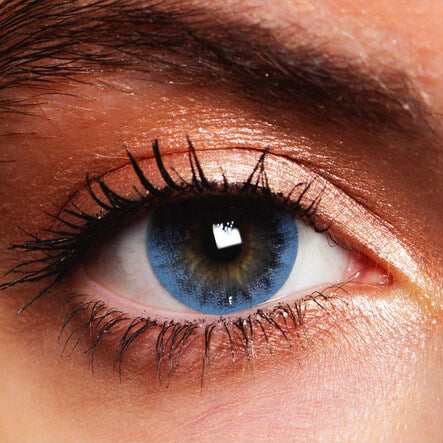
Blue lenses can create a striking transformation, particularly against naturally dark brown eyes. Lighter shades tend to make a more noticeable statement, while deeper or muted blues can offer a more understated finish. If you're drawn to blue eyes but worried about an artificial-looking result, explore different shades rather than assuming the palest blue will be the most flattering.
Explore our blue coloured contact lenses to compare shades and find your preferred look.
Green Coloured Contact Lenses
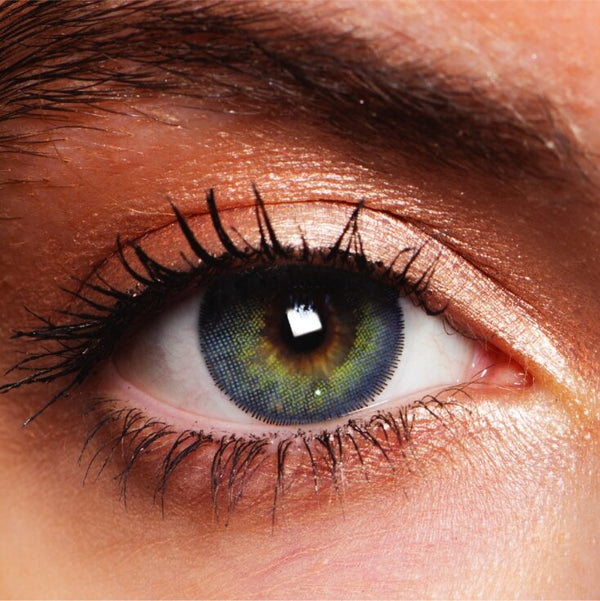
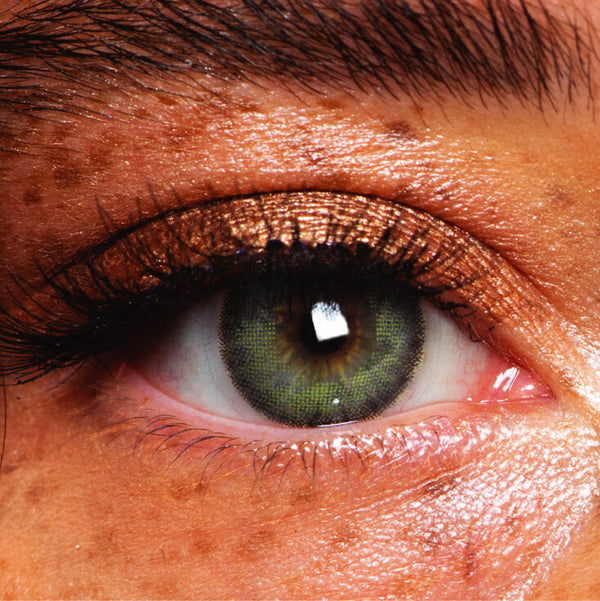
Green eyes can look vivid in photographs, especially when the shade contrasts with your natural colouring. Olive and moss green tones offer a different aesthetic from brighter, more saturated greens, giving you options ranging from earthy to eye-catching.
For photographs where you want your eye colour to stand out without dominating your entire look, consider how the green shade works with your natural eye colour.
Discover our green coloured contact lenses and explore the different shades available.
Hazel Coloured Contact Lenses
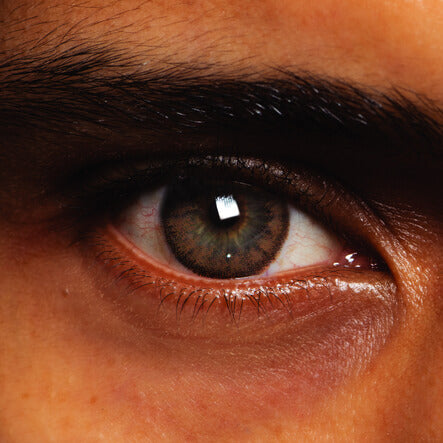
Hazel lenses are a versatile option for anyone who wants warmth and dimension rather than a single, uniform colour. Depending on the shade, hazel can lean golden, honey-toned or greenish brown, creating different effects in photographs.
The result can be particularly appealing if you want a noticeable change that still feels harmonious with your natural colouring.
Browse our hazel coloured contact lenses for warm, multi-tonal looks.
Brown Coloured Contact Lenses
Brown lenses are not just for people who want to keep things subtle. Rich chocolate shades can deepen the appearance of naturally lighter eyes, while warmer browns can add a different tone to existing brown eyes.
Because brown encompasses such a wide range of shades, the finished effect depends on the lens design and your natural iris colour. For a closer look at choosing the right shade, read our guide to the best coloured contact lenses for brown eyes.
Grey Coloured Contact Lenses
Grey lenses can create a cool-toned, editorial look that stands out in portraits. Pale grey shades may produce a dramatic contrast against dark eyes, while deeper or softer greys can give a more restrained effect.
If you're considering grey for a special occasion or a striking photo, compare the different shades to see which best matches the look you have in mind.
Explore our grey coloured contact lenses to discover the available options.
So, Which Colour Should You Choose?
There is no single shade that photographs best on everyone. Blue and grey can create a dramatic change, green offers everything from earthy tones to vivid colour, and hazel and brown provide warmer alternatives. The right choice comes down to your natural eye colour and the result you want to achieve.
Take a look at the collection below to compare the available colours and find a pair that suits your style.
Most-loved shades in the UAE
Finding Your Best Colour
Coloured contact lenses can look different from one photograph to the next, but that doesn't mean you need to overthink every selfie. The lens design, your natural eye colour and the way a photograph is taken all influence the final result. Sometimes, a shade that looks striking rather than subtle is exactly what makes it work.
If you're choosing lenses for a special occasion, experimenting with a new look or simply curious to see yourself with a different eye colour, take the time to explore the options. From cool-toned grey and blue to warmer hazel, brown and green, the right shade is a personal choice, not a formula.
Browse the MesmerEyez collection to discover the colours available and find a look that suits your style, whether you're in front of the camera or nowhere near one.
Frequently asked questions
Why do my coloured contact lenses look unnatural in pictures?
Coloured contact lenses can look more noticeable in photographs when their shade contrasts strongly with your natural eye colour or their printed pattern stands out in a close-up. Lighting, camera settings and image processing can also affect how the colour appears.
Do coloured contacts look more natural in real life than in photos?
They can. In everyday interactions, people see your eyes as part of your overall appearance rather than in extreme close-up. Photographs can magnify the iris and draw attention to details that are less noticeable at normal conversational distance.
Why do my coloured contacts look different under flash?
Direct flash changes the lighting conditions in a photograph and can affect how colours, highlights and shadows appear. Compare photographs taken with and without flash to see how the shade looks under different conditions.
Can I make coloured contact lenses look better in selfies?
Try taking photographs in soft, even lighting and avoid relying entirely on filters or heavily edited images when judging a lens colour. You can also compare close-up selfies with photographs taken from a more natural distance to see how the effect changes.
Do coloured contact lenses look fake if people can see the pattern?
Not necessarily. Coloured lenses use different designs to create their intended appearance, and a visible pattern does not automatically mean the result looks unnatural. The overall effect depends on the design, colour contrast and how the lens looks against your natural iris.
Find your colour
Find your perfect lens colour
Shop the UAE's most-loved coloured contacts — CE-certified, breathable and made to suit darker eyes.
The MesmerEyez Journal
Keep reading

The Black Friday Edit: Coloured Contacts Worth Adding to Your Wishlist
Looking for a new eye colour? Explore the MesmerEyez Black Friday Edit, featuring our favourite coloured c...
Nov 20, 2026
How Long Do Coloured Contact Lenses Last? Understanding Replacement Schedules
When shopping for coloured contact lenses, the lifespan tells you how long a pair is intended to be used be...
Oct 25, 2026
Your Hijab Colour and Your Eye Colour: Combinations Worth Trying
Choosing a hijab colour is often part of putting a whole look together, from the outfit and makeup to the j...
Oct 12, 2026